The new bot should clean up the old bot’s mess
The majority of AI projects fail because we’re using these tools the wrong way.
 By ·
By ·

I keep seeing the same stat over and over: 95% of AI projects fail. (I specifically keep seeing it because AI companies continually trot it out to insist that they’re in the 5%.) I have no argument with that stat. It may be entirely correct. But I think I can diagnose the problem—and it’s not the tools.
People keep throwing wildly ambitious product problems at LLM-based coding. They want to build products, or replace employees, or make whole new platforms, and they want to do it in five prompts or less—and sometimes, after an hour of churning through tokens, it kind of works, which releases so much dopamine that they go back for more, and more, even though it might stop yielding good results. AI coding feels like a piñata just burst and if you don’t rush in there with your elbows out you’ll be left with only Tootsie Rolls. And not chocolate—the light blue Tootsie Rolls (vanilla flavor). But just because some guy on the internet says he can build anything with vibe coding doesn’t mean you should start there.
But where could you start that won’t fail? Here’s my suggestion: Over the last 50 years, we have allowed computers to make an ungodly mess of everything they touch. For example:
- The enormous pile of scanned documents that are filled with errors.
- The seven different spreadsheets we use to manage inventory.
- The grant-application website in PHP from 2003 that isn’t accessible at all.
- The CRM that has thousands of duplicated records.
- PDFs.
We’re swimming in digital mess—and that’s one thing AI is indisputably good at cleaning up. You can have it look at all the scanned documents and fix the OCR errors. You can import all the spreadsheets into a database and make it more usable. You can have it tell you what’s wrong with the grant application website and suggest five or six ways to sort it out. You can let it tidy up the CRM. If you’re sensible and use best practices, it’s basically going to work. You need to approach it as a project, and actually build a little system, but you can get everything moving in an hour or two.
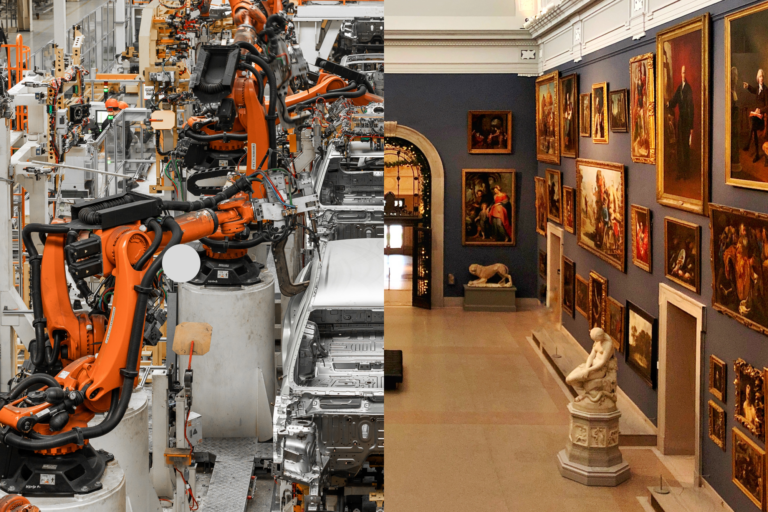
To boil it down to a principle: The first use of this new technology should be to clean up the mess made by the old technology.
One of the things I’m most excited about in 2026 is data migration. That’s a pitiful statement, but it’s true. Let’s say you’ve got a big pile of weird data—XML, or binary-packed, or CSV dumps out of Microsoft Access. You want to bring it into a “normal” database so that you can do “normal” things with it, like build web apps that reference it, or run some reports. But it’s your data! It’s sacred! And vibe coding is messy. What if it screws up the import?
You can instruct a vibe-coding tool this way:
- Look at those data files. Design a SQL schema. Import them into a database.
- When that’s done, write a tool to export the data in a format that is exactly the same as the input, down to the byte, and prove it.
This is the kind of tedious task that humans hate. AI doesn’t care though. And yes, you’ll need to review the system it builds, and when it’s done, you’ll need to read through the code and run it without any AI involved—and then you can say, “Yes, the data going in is provably the same as the data coming out, through the power of math.” (It’ll likely use checksums, a simple comp-sci type of idea that’s been around forever.)
Which leads me to principle two: The best way to validate the work AI does is by running non-AI validation tools. Or to boil it down even further:
- Old computers made a lot of mess.
- New computers should clean it up.
- Once they do that, use old computer methods to make sure the new computers did a good job.
Sounds boring, doesn’t it? But I swear to you—pinky swear—that this stuff can work. You have to, you know, program a little. You can’t lean back with your tongue out and your eyes half shut like a dead racoon. But it’s worth it. Because once you get all your old mess cleaned up and things are in nicely organized databases, you know what you can do then? You can start using all the AI tools your boss craves, like RAG search, or chat interfaces, or customizable dashboards that communicate in song. You can even make whole new products. Once your room is clean, you can play with your toys. But not before! Otherwise you’re just making more mess.
At Aboard, where we work, people come to us for “AI,” but when we look inside, we find that their entire company is flowing through a system that runs on spreadsheets, legacy Microsoft products, carrier pigeons, and is critically dependent on a lady named Coral who works in Florida, makes $48,000 a year, approves $350 million in transactions, doesn’t answer emails after 6PM, and drives a Kia Soul.
This is very, very normal. The good news is that it’s really, truly not that bad to clean stuff up, and it’s incredibly simple and much faster than it used to be. But. You. Still. Have. To. Do. It. Watching tens of thousands of greatly improved, error-checked invoices flow into a new system—it makes me so glad. Now Coral can take that vacation to Ocala and ride horses.
Everyone keeps skipping the part where you build the house before you paint it. They’re just balancing on a ladder, spraying paint everywhere and wondering why none of it sticks. It’s never, ever been easier to clean up digital mess. Start there. Not out of virtue, but because once you tidy things up, you can jump right into the future.
One of the world’s leading technology thinkers, Paul Ford has written about the way that software works for dozens of publications like Wired, Businessweek, and the New York Times. He co-founded Aboard with Rich Ziade.
More from the newsletter
All issues-
Don’t mix up artifacts with processes
You can predict how someone will feel about AI based on how much of their life is spent inside of a bureaucracy.
-

And now, a word from our sponsor!
What is Aboard today? Call it a praygency—product plus agency, powered by AI.
-

Advice for the AI revolution
As orgs resist change, leadership needs courage and humility to embrace what’s coming.
The Aboard Newsletter
Want more of this?
From Paul Ford and Rich Ziade: weekly insights, emerging trends, and tips on how to navigate the world of AI, software, and your career. Every week, totally free, right in your inbox.