
The Read Planet.
I recently picked up the book Muskism: A Guide for the Perplexed by Ben Tarnoff and Quinn Slobodian. There have already been a number of solid, useful reviews of the book, like the one by Jen Szalai in the New York Times, so I won’t do a full review. But I had a few thoughts that I wanted to knit together.
The book is a methodical, well-cited exploration of what Musk believes and how he operates, based on his public statements and deeds. Given Musk’s level of influence over multiple key industries (space, automotive, battery technology, and satellite internet), his ownership of Twitter, and the destructive path he blazed through government agencies with DOGE, it’s a surprise that we’re just reading a book like this now. It pushes us to stop seeing Musk as a famous, wealthy individual and instead treats his enterprises as a kind of nation-state that’s deeply engaged with other nation-states, and whose actions have major effects on our lives.
I appreciated that Muskism keeps biographical details mostly at bay in order to focus on Musk’s actions; it doesn’t seek a magical psychological key to his pathologies, but rather focuses on things like why he built the Gigafactory, or his public statements. It’s also a short book, which is a blessed thing, but that inevitably means it cuts a lot out and starts a bit late in its analysis of the cultures and ideologies that formed Musk’s thinking.
For example, Muskism introduces internet edgelord/meme culture via 4chan, which launched in 2003—a defensible position, but the roots of that culture go much deeper, back through all kinds of right-wing libertarian/Heritage foundation/Ayn Randian currents. Then again, to do it well, you’d need a thousand-page book, and I don’t know if any of us have that in them.
At some level, I wish they’d started smaller, maybe with Bezosism or Dorseyism, because Musk is very hard to pin down. He’s got the Canadian technofeudalist grandpa who moved the family to South Africa because Canada wasn’t apartheid enough. He’s raised on sci-fi and giant robot cartoons. He’s both entirely of Silicon Valley—part of the PayPal Mafia!—but also left the Valley monoculture to build big, physical things like rockets and factories, right as Web 2.0 and mobile were heating up. One day he’s trying to save the world from climate change with more efficient batteries; the next, he’s insisting we’re doomed and we need to get to Mars. He oscillates constantly between dystopian predictions and utopian fantasies, but whichever he’s chosen for the day—he’s the guy who will save you from the dystopia, or get you to the utopia. Then there’s the atrocity of his Twitter acquisition. He’s a slippery guy.
The last 50 pages of the book are an earnest attempt to make meaning out of Musk’s psychedelic collage of wild tweets, fantasies of robot armies, memecoins, increasingly racist ideology, and his growing power. The guy’s brain seems to be a kind of industrial soup. But to me, a key of Muskism is in this headline from Fortune in 2022, right as Musk bought Twitter:
‘I did it to try to help humanity, whom I love:’ Elon Musk drops a new statement as his Twitter takeover inches closer and says he won’t turn it into a ‘free-for-all hellscape’.
The second part is, in retrospect, hilarious, because he absolutely turned Twitter into a free-for-all hellscape. But look at the first part: “I did it to try to help humanity, whom I love.” Grammatically, it’s a little baffling, until you realize that at some deep and fundamental level, Musk does not see himself as belonging to humanity. He sees the rest of us as “other.” He loves us, though. So we should be grateful. My personal thesis is that he’s trying to make us all so exhausted and miserable that we’ll want to leave the planet, and we’ll have to pay him for rocket fare.
In an interview about the book with Atlantic writer Charlie Warzel, Slobodian said:
My feelings about [Musk] have, you know, deepened intensely toward real loathing. I mean, I think that his own actions over the last year and a half, since we started this book, have gone from depth to depth in terms of his inhumanity and his embrace of this theory we call suicidal empathy—so the belief that to feel emotional bonds with one’s fellow humans around the world is the central exploit and character flaw that we must suppress at all costs.
Which makes sense. A core tenet of Muskism is that it concerns itself with humanity, but has very little concept of the human, except as consumer, acolyte, or enemy.
That said, a lot of people really like the guy and are engaged with his thinking. I wish the book had spent more time on the positive case for Muskism, because millions of people still hang on his words and model their lives after him. And his ideologies are seriously engaged in different places, too; if you search Reason magazine for Musk articles, you’ll find a lot interpreting Musk through a libertarian lens, arguing in favor of trillionaires, and so forth.
This book confirmed a lot of my priors, which is soothing, but I also think I need to understand better why this guy is so motivating to so much of the world. That said, I think we need lots of books like this one, about all the different tech-isms that are running our world.
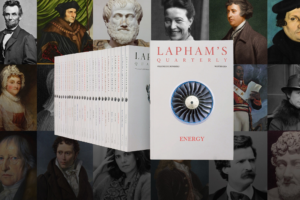
A Brand-New Archive for a Historical Treasure
How we got the full back catalog of Lapham’s Quarterly online.

About That $30 Trillion
Thoughts on Anthropic’s eye-watering market prediction—and how AI companies are like jam bands.

Little Computer People
A tour through AI software’s past from the Internet Archive’s Jason Scott.