Lapham's Quarterly Turns Decades of Back Issues Into a Searchable Subscriber Archive in Six Weeks
Every issue, fully searchable, available through a simple subscriber login.
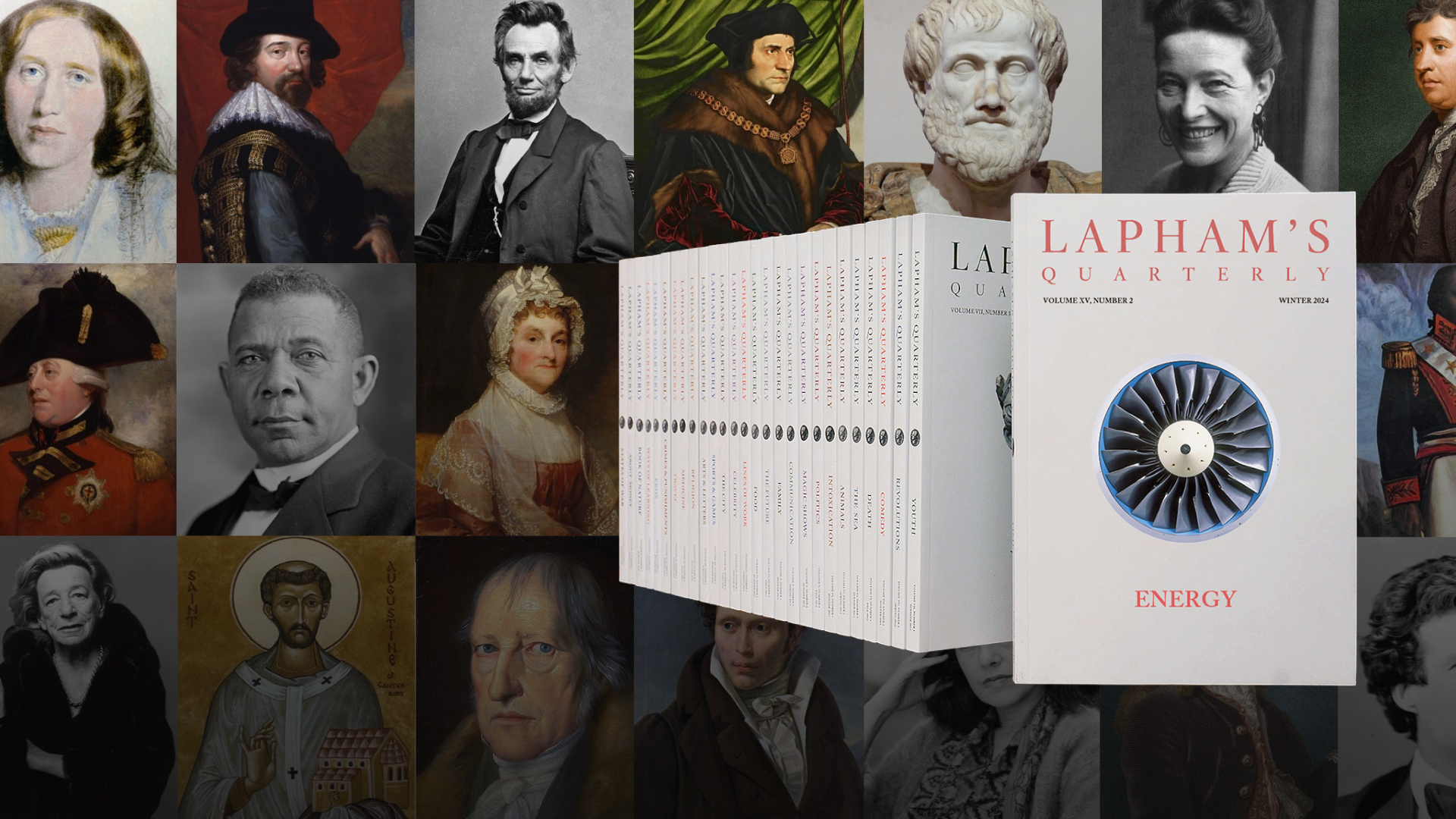
Lapham’s Quarterly, founded and built by founder Lewis Lapham into one of the more distinctive voices in American letters, has been published for nearly 20 years. Each of its 61 issues is centered on historical primary sources around a single theme—Memory, Water, Revolutions, Time. After Lapham passed away a few years ago, a group of editors stepped in to keep the magazine going, with institutional support, and relaunched it on Substack.
The relaunch created an opening: give new and returning subscribers a real reason to feel good about paying for a subscription, and finally bring the magazine’s full back catalog online in a way worthy of it. The commercial options for hosting a magazine archive were generic and forgettable. The Lapham’s Quarterly team had already looked at a few and come away uninspired. And the available free, open-source alternatives are built for librarianship, not for a subscriber experience, and would be hard for a small organization to maintain on its own.
Lapham’s Quarterly needed a custom archive that felt like an extension of the magazine itself, and would be a simple enough platform for a small team to run day-to-day, including bulk tools for managing thousands of subscriptions with rolling expiration dates.
The Aboard Solution
One of Aboard’s co-founders, Paul Ford, has a personal connection to Lapham’s Quarterly and built the first working prototype himself. What started as a two-hour proof of concept became a six-week engagement, handed over to Aboard’s engineering team, to turn that prototype into a real, secure, production-ready archive.
What We Delivered
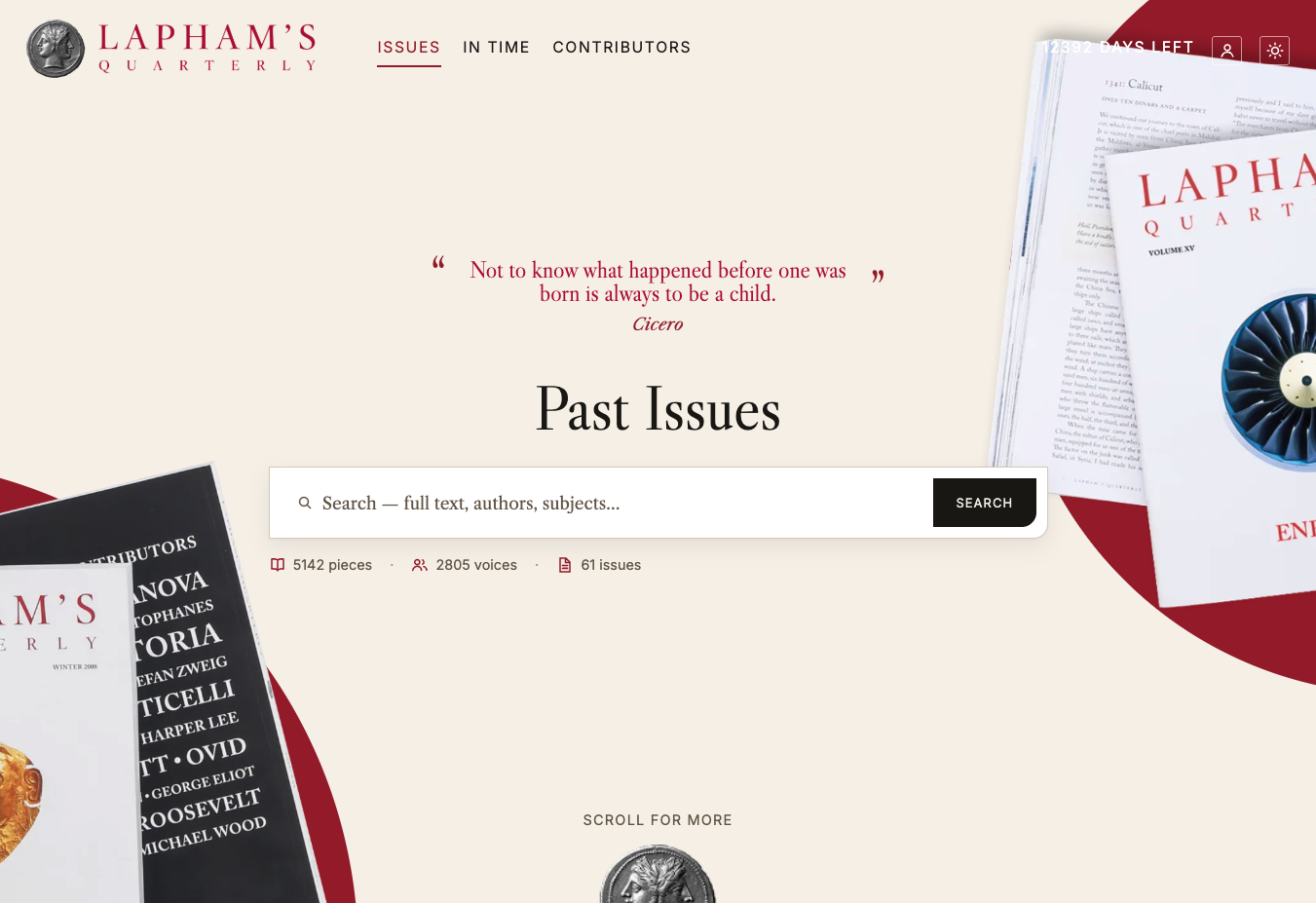
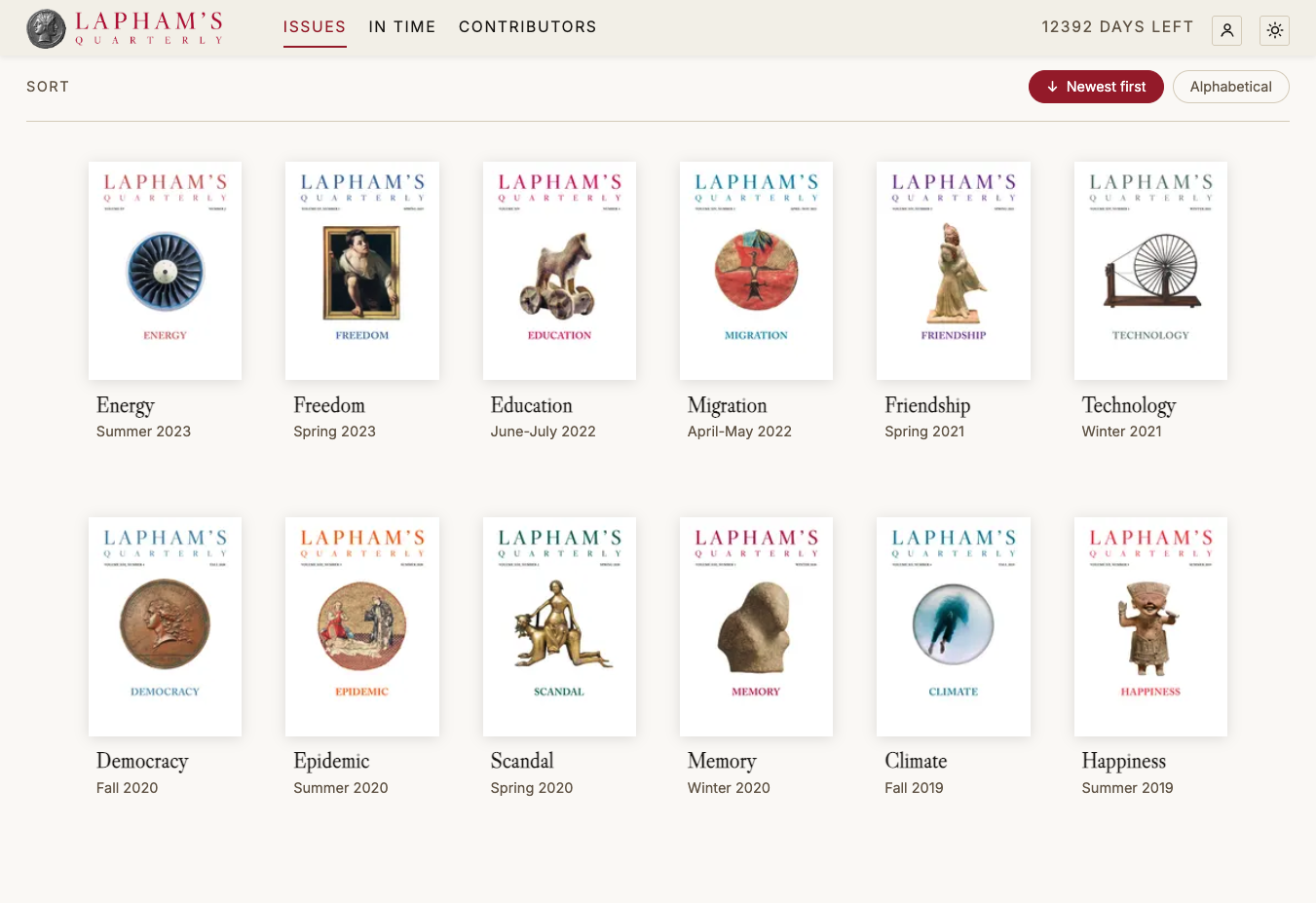
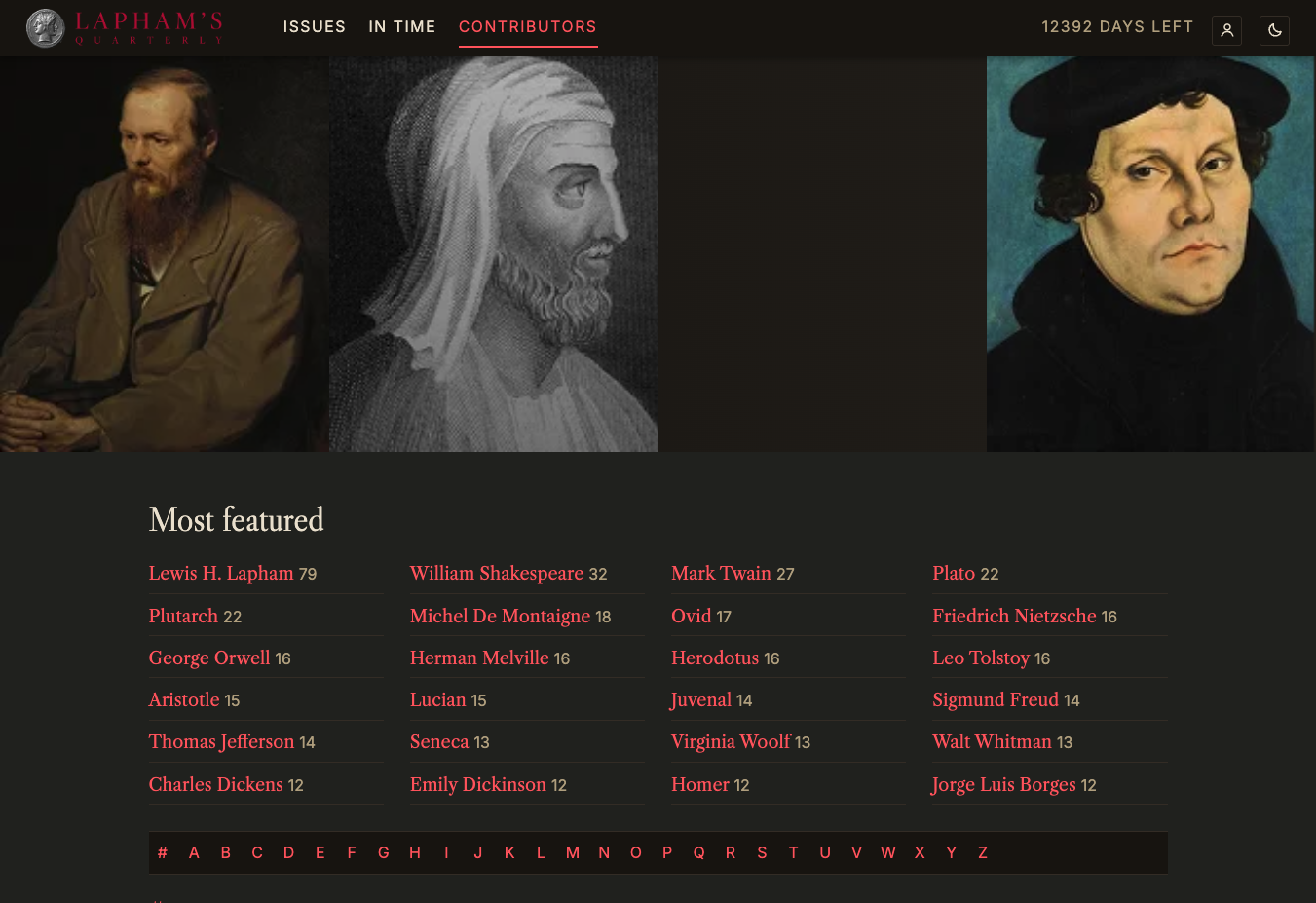
A complete, searchable digital archive of Lapham’s Quarterly‘s full back catalog, accessible to subscribers through a simple email login. Each issue is readable in its original form, optimized for both desktop and mobile reading, and wrapped in a design built from the magazine’s own brand, color, and typography.
Key Technical Achievements
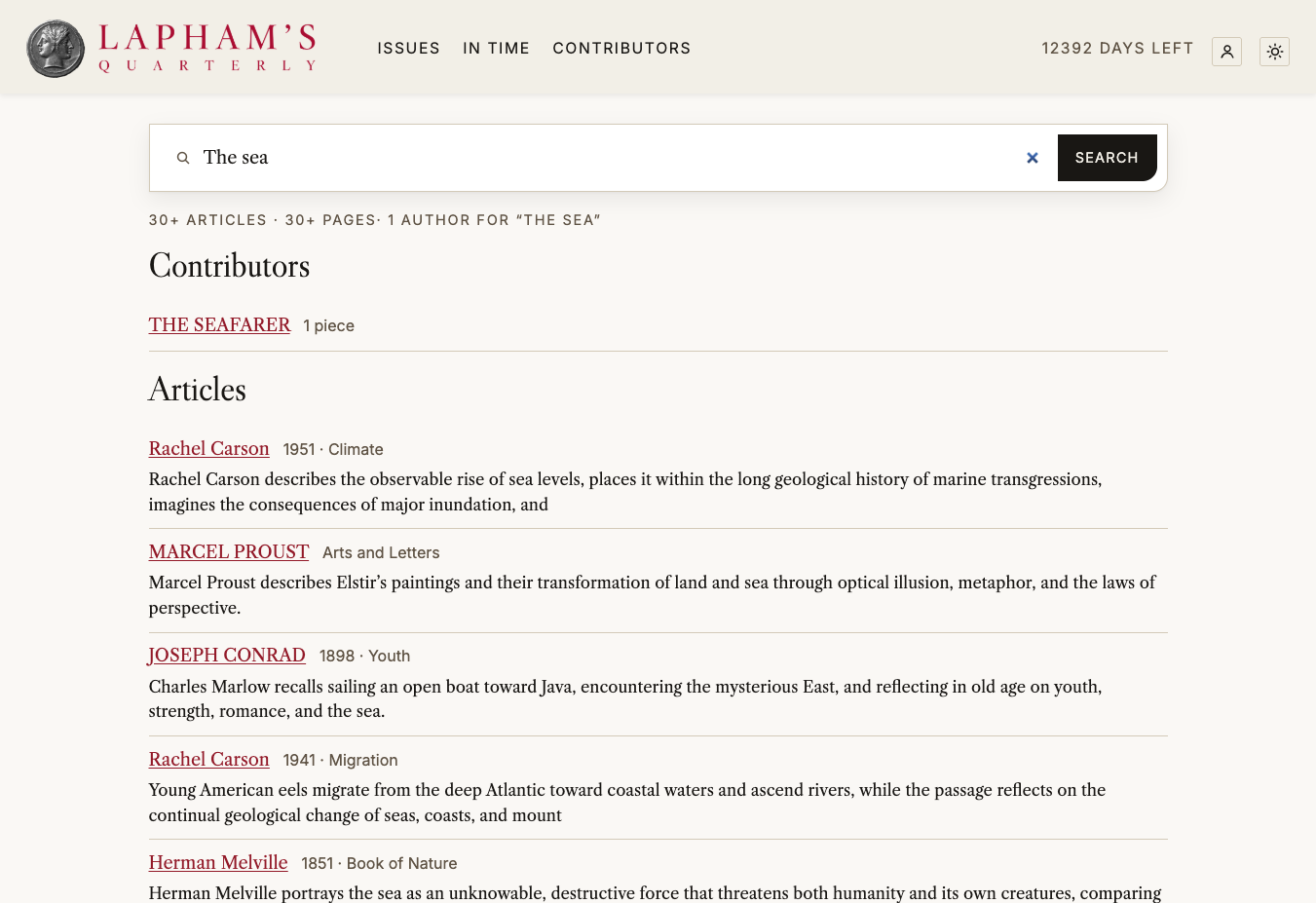
- Page-level full-text search — with no existing bibliography or article database to work from, the team built a search index from each issue’s table of contents and correlated it directly to page numbers in the original PDFs, so a search takes readers to the right page rather than a generic article summary
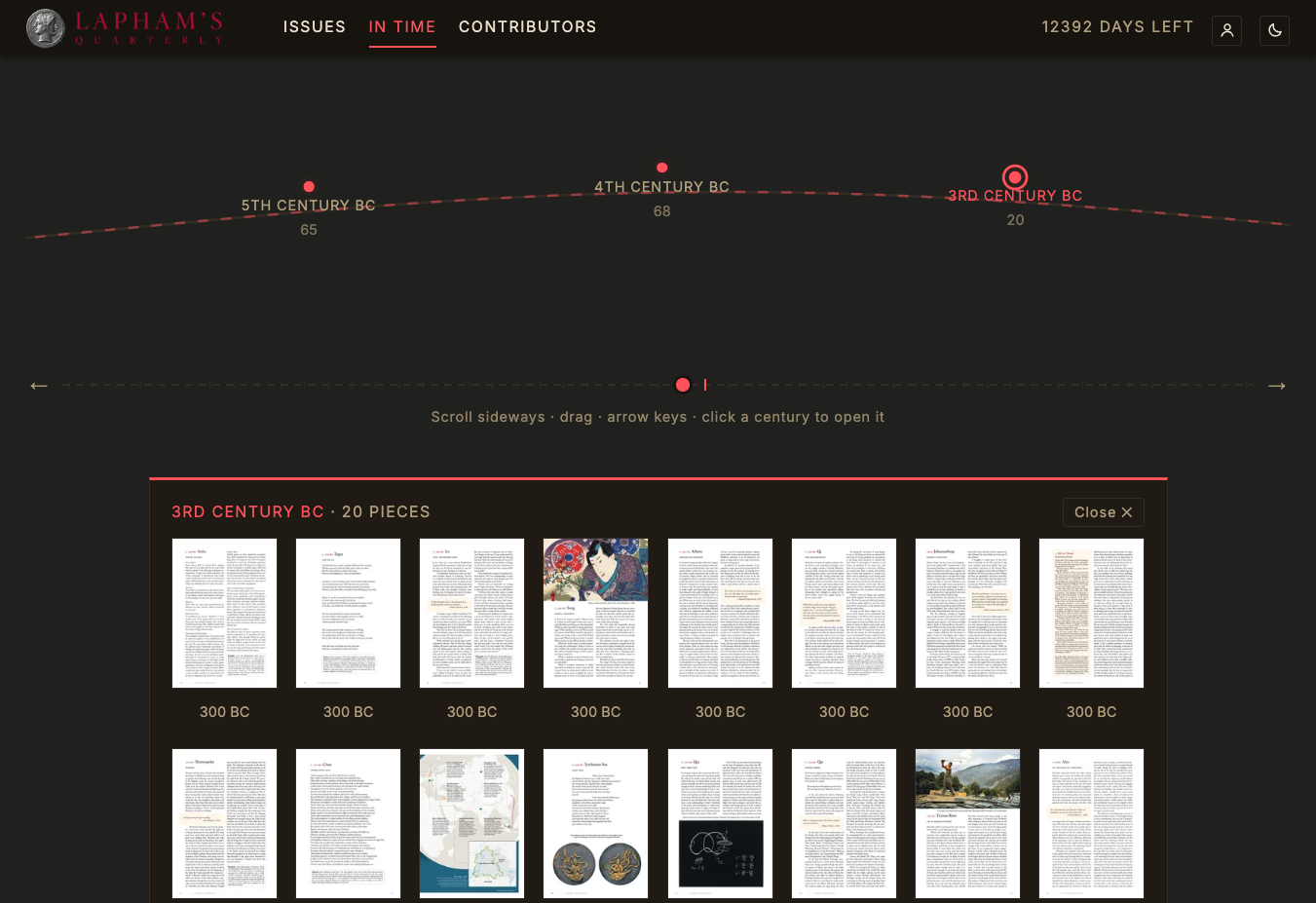
- Historical timeline organization — content is also organized along a timeline of when each piece was originally drawn from, since the material itself spans a long historical range
- Mobile-optimized PDF reading — real pinch-to-zoom on dense columns of text, for a publication built to be read in print but with its archive most often opened on a phone
- Bulk subscriber management — administrative tools for pasting or uploading spreadsheets of subscribers, built for a small team managing thousands of subscriptions that expire on a rolling basis
Where AI Did the Work
AI played two roles here, and neither touches what a reader actually sees. It helped build the site itself, standing up the first prototype and then helping rebuild that prototype into the more reliable, production-ready structure that followed. AI also powers the search infrastructure running on the server, with vector embeddings working alongside full-text search to index page content. But there’s no generative AI anywhere in the finished product. The front end is deliberately AI-free. It’s built for sharing and displaying a magazine, and full-text search is more than enough for that job.
Where Humans — and Fixed Source Files — Did the Work
The original PDFs are treated as untouchable source artifacts; nothing rewrites or regenerates a page or its contents. Subscriber data is kept entirely separate from any AI system; it’s uploaded as CSVs over a secure connection into a cloud-hosted database, handled with the same standard care as any other sensitive data on a well-run website.
How We Verified It Was Correct and Safe to Ship
Because the pipeline only extracts text that’s already sitting in the original PDF rather than generating or rewriting anything, the risk profile here was low by design: the source files never change, and subscriber information never touches an AI system at any point.
The Technical Challenge
The fastest part of this project was also its biggest risk. The first working prototype came together in just hours, fast enough to be a genuine, delightful surprise, and proof the idea was worth pursuing. But a two-hour prototype and a finished product aren’t the same thing, and both sides knew it going in. The real work was in the weeks that followed, with Aboard’s engineering team rewriting the code into something stable, while also standing up proper hosting, securing it, and working through the small operational glitches that came with actually importing years of PDFs. In the team’s own words: you can rope a lot together very quickly, but making it a product people actually want to use is still real, hard work.
Results & Impacts
A Real Subscriber Perk, Not a PDF Dump
Lapham’s Quarterly can now offer new and returning Substack subscribers meaningful, tangible access to its full archive. That’s exactly the kind of substantive bonus that makes an otherwise abstract subscription feel worth paying for.
Search That Actually Points You Somewhere
Instead of generic keyword search across a pile of PDFs, readers get results tied to the exact page they’re looking for, organized along a historical timeline rather than a flat list.
Built for a Small Team to Actually Run
Bulk subscriber tools mean a small editorial team can manage thousands of subscriptions with rolling expiration dates without the archive becoming a second job.
Ready for What Comes Next
The same infrastructure is ready for new issues if Lapham’s Quarterly resumes print, and built so the client can eventually take over hosting it themselves.
Key Takeaways
Beyond Prototyping
This project draws the clearest possible line between a demo and a finished product: the prototype took two hours, but everything that followed, the six weeks of focused engineering work, was the real, necessary work of making something stable, secure, and genuinely usable.
AI Where It Matters
AI built the site and powers its search infrastructure, but never touches the reading experience or user data. The finished product has no generative AI in it at all, a deliberate choice, not an oversight.
Small Data, Big Value
In the team’s own words: “We can take your data, whether it’s magazines or databases and spreadsheets, and extract enormous value out of it and make it available to anyone who should see it, in ways you never considered.”
A Replicable Pattern for Archives
The same approach scales in either direction without reinventing the underlying architecture each time, whether that be a small magazine’s back catalog or an organization’s thousands of legacy PDFs.
Want to see how Aboard could work for a project like this? Get in touch