- Client
-

- Industry
- Travel
A platform modernizing luxury travel operators
A single collaborative platform replacing a mix of email, WhatsApp, Excel, and PDFs for the world's top travel advisors and destination specialists.
The challenge
Etwal set out to build what its founder calls “the operating system for luxury travel”: a single platform for travel advisors and destination management companies (DMCs) to collaborate on itineraries for high-net-worth clients — the kind of travel that involves private security, chartered jets, and on-the-ground fixers, not a family trip to Paris.
Before this platform, that collaboration happened entirely over email, WhatsApp, Excel trackers, and PDFs: a travel advisor might send a handful of DMCs a detailed brief and wait days for a single response, then go back and forth for a week or more before a client ever saw a proposal.
The founder came to Aboard with an unusually clear vision and an unusually large amount of raw material — roughly 200 pages of documentation, down to API specifications, plus rough prototypes she’d built herself using Claude. She’d also already hired another firm to build the platform; that engagement stalled without shipping. By the time she came to Aboard, there was a hard go-live date already in place, tied to the seasonality of the travel industry itself: start now, or wait for the next quarter’s travel season. Game on.
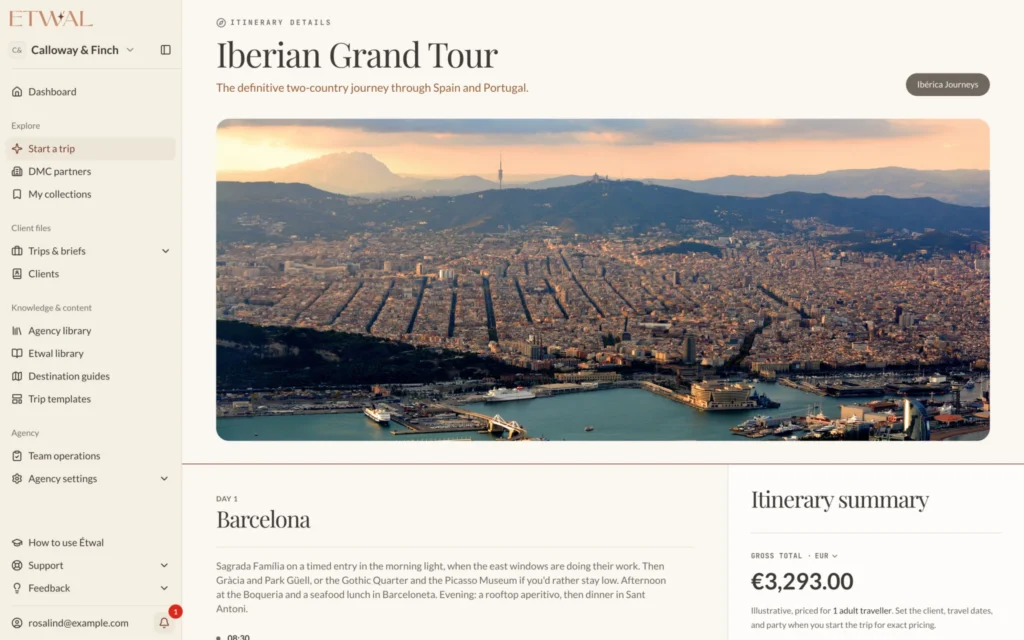
Browsing pre-bundled trips
Drilling down on options
The Aboard solution
We took on a platform that needed to go from nothing to fully in production in 10 weeks, a timeline the team even now calls “truly insane” for something this complex.
And yet…
What we delivered
A collaborative platform where travel advisors can build a trip three ways: starting from a DMC’s pre-built package and customizing it, assembling one from scratch out of their own and DMCs’ component libraries, or sending a structured brief to multiple DMCs at once — then sharing with their end client for review.
Key technical achievements
- “Build from Scratch” — two entirely new trip-creation flows (structured briefs and an à la carte itinerary builder), covering roughly a quarter of the app’s total scope, shipped in about a week
- A pricing engine handling variant, children’s, seasonal, and other pricing variants, margins, and multi-currency conversion, including mixed currencies within a single trip
- A data model detailed enough to represent nearly any trip component, structured specifically to support AI-assisted ingestion of each DMC’s own component library
- Visibility gating so DMCs can’t see each other’s components or pricing, while travel advisors can see everything — enforced throughout the platform, not just at login
Where AI did the work
Aboard’s custom project-management and collaboration hub, Cadence, drove discovery on two fronts at once: making sense of an unfamiliar industry, and turning lots of existing client documentation into a concise, workable plan. AI also powered the ingestion of DMC component libraries into the platform’s data model, and a full design system was extrapolated from a handful of key screens using Design Loop, Aboard’s internal design tooling, rather than designing every screen by hand up front. Claude was the primary engine behind the build speed — one engineer, working directly with Claude, built the platform’s foundation before design work had even caught up.
Where humans did the work
All intake processes and client-facing communication stayed manual, as it always does with Aboard. Product judgment stayed entirely human, too. We say it all the time: AI can do a lot, but it can’t figure out what you need.
How we verified it was correct, secure, and safe to ship
Every pull request runs through a Claude-powered tool, built by the team, that generates a full list of acceptance criteria automatically — but every PR is still reviewed by a person on top of that. Test-driven development was enforced even within AI-assisted coding: tests get written before the code that has to pass them, which keeps a large, fast-moving codebase from turning into a long-term liability. Client and DMC data privacy is enforced at a granular level — client details are shared with each DMC only on a need-to-know basis that can vary trip by trip, and DMCs’ own component libraries and pricing stay invisible to each other throughout the platform.
The technical challenge
The clock was the challenge, more than any single technical obstacle.
Ten weeks to build a fully-featured platform meant setting aside some of the niceties of the usual order of operations — engineering started before there were fully completed wireframes, working instead off a handful of key screens and a design system extrapolated from them afterward. Building a coherent, unified experience on top of genuinely complex workflows — custom pricing, multiple ways to build a trip, dozens of possible trip components — remains real, ongoing work even now, in the platform’s second phase.
Users can start a trip using any parameter
Robust customization across dozens of options
Results and impact
A faster path from idea to proposal
What used to take a travel advisor a week or more of email back-and-forth before a client saw a single proposal now happens fast inside one platform, with real-time chat between advisors and DMCs built in.
Built where a prior vendor couldn’t
A previous vendor’s attempt at this same platform stalled without shipping. Aboard delivered a full production platform in 10 weeks. Since then, it’s only gotten better.
A working pilot
Currently live with one of the most prominent New York City luxury travel agencies (roughly 140 staff have platform access) and around 20 DMCs, as the founder works toward a goal of 60 DMCs by year’s end, and more agencies once testing and learning has been completed and folded back into fixes for the future version of the platform.
Key takeaways
Speed is not a solution
A previous vendor tried to build exactly what the founder asked for, with the help of AI, and got nowhere. What mattered here was product expertise: figuring out what to build, and then still doing it faster than anyone thought possible.
Curate AI, don’t dump it
Cadence, and AI generally, is only as good as what goes into it. Deciding what a client’s raw, unfiltered input actually means is a deliberate product judgment call, not something to hand off wholesale to an AI system.
Design debt compounds
Skipping full upfront design work to move fast is a real tradeoff, not a free win. Complex platforms need real UX consideration from the start, or the coherence gap shows up later and has to be paid down.
Want to see how Aboard could work for a project like this?
Keep reading
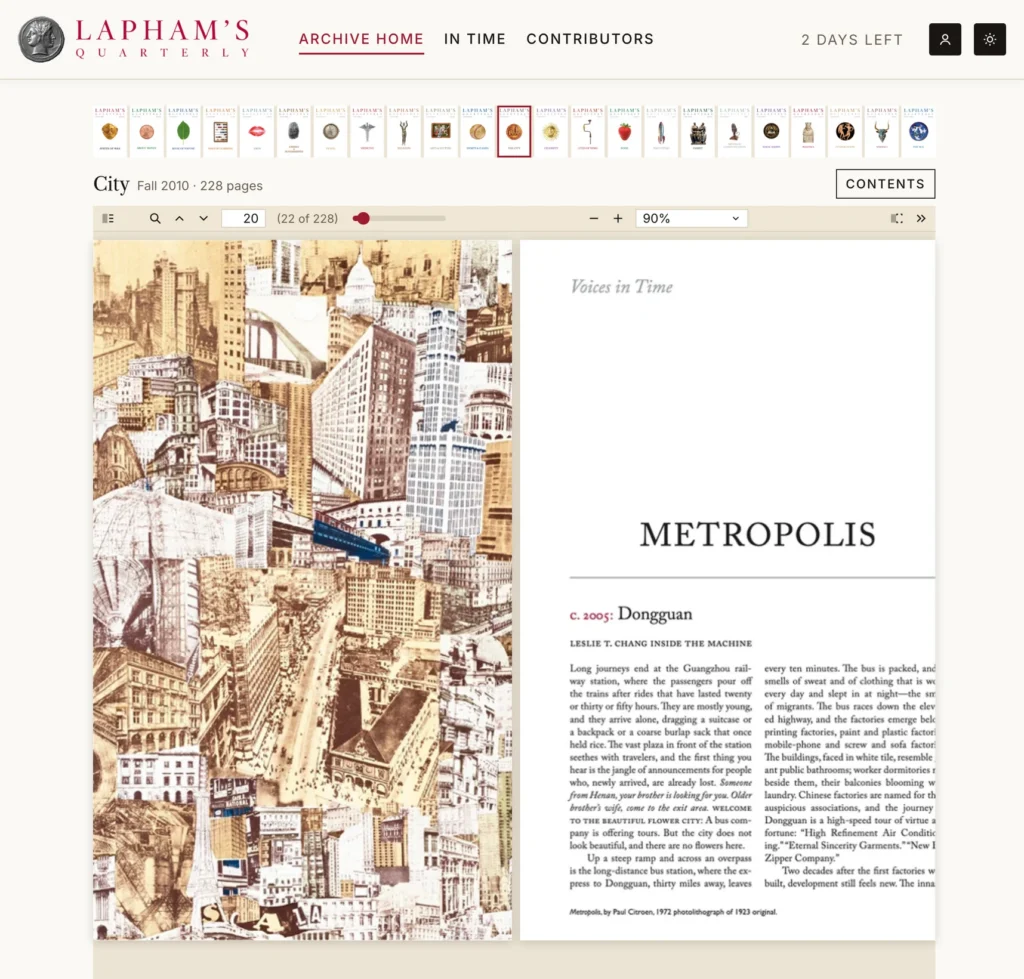
 Publishing
Transformative digital archive for a legendary journal
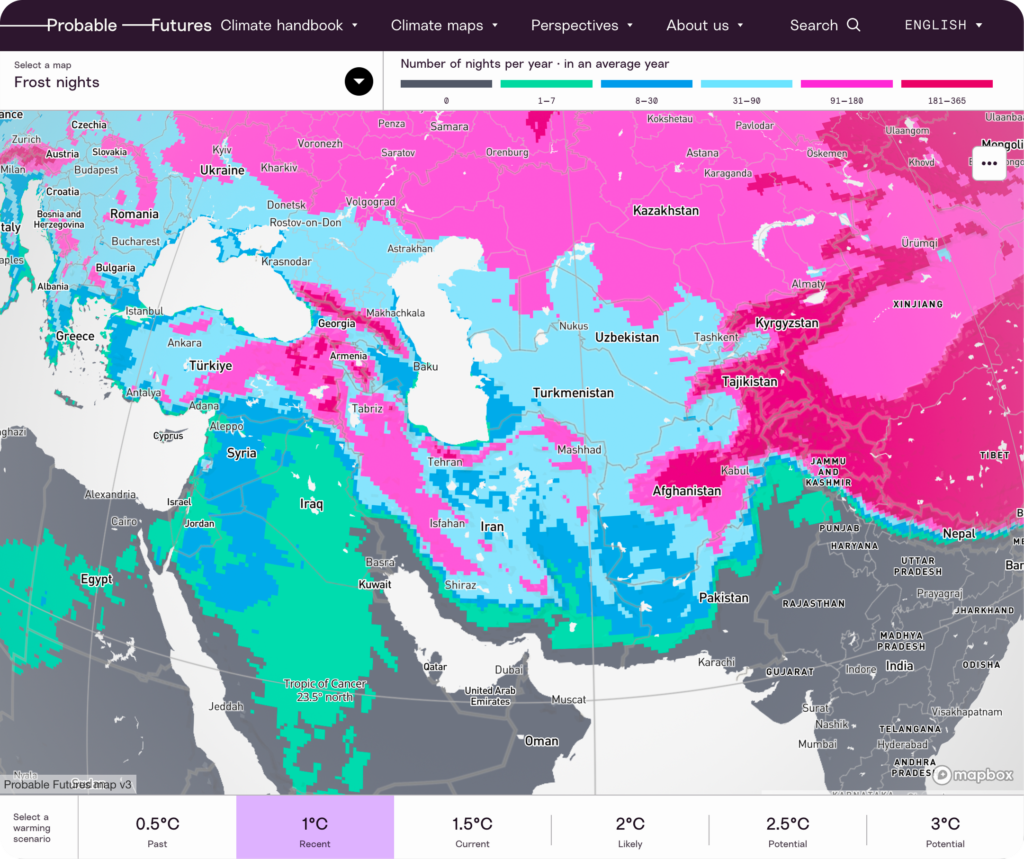
 Climate
Climate data accessibility for researchers, policymakers, and the world

 Government
Taking the headaches out of municipal scheduling