- Client
- Evo
- Industry
- Internal tool
A tool that reflects our principles: careful planning, accelerated with AI
How We Went From a Paused Internal Project to a Mostly AI-Written Platform in Days.

The challenge
Before Evo, Aboard’s Lebanon team ran HR, staffing, and operations using a patchwork of SaaS applications and shared documents nobody enjoyed using.
Employee staffing was tracked in Airtable: by SVP of Solution Delivery Alexi Akl’s own account, the system was unintuitive, with plenty of workflows it simply couldn’t support.
As the team grew, problems mounted. Expenses were submitted over email. Performance reviews lived in Google Docs and other internal platforms. Company events were added to calendars by hand, one at a time. There was no shared system for company-wide to-dos. Even something as simple as tracking who’d completed a required certification had no home. Recruiting meant searching old email and Slack threads for the right candidates.
On top of the workflow pain, real money was going out the door for tools that only partly solved the problem: Greenhouse for recruiting (roughly $10,000 a year), Pingboard for HR management (roughly $4,000 a year), which didn’t even cover performance reviews, handled by a separate, pricier tool. And many more smaller subscriptions, too.
Aboard needed a single home for HR, staffing, and operations. As it turned out, the company had already tried to build one, but time constraints had made progress slow.
The road to Evo
That earlier attempt was called Scarlet.
As CTO at the time, Alexi had been hearing the same pain points from management for years, and tried repeatedly to build a fix using engineers’ bench time whenever it was available. The spec was good, but the need to coordinate the build across multiple team members made it challenging to execute, because it was never a top priority. So for over a year, Scarlet took shape, but wasn’t ready to ship. The classic fate of internal projects everywhere.
Then Claude Opus was released. Now one good engineer armed with a thoughtful set of product requirements and AI coding tools could execute everything independently. And of course he repeatedly took his progress back to the business users, got feedback, and iterated. But that loop was much much faster now. In Alexi’s words, “the entire vision clicked into place… I was able to execute it rapidly.” Scarlet’s old requirements docs and codebase became the starting point, and a working platform took shape in days, not months.
There was never a serious off-the-shelf alternative on the table. As Alexi put it: “I knew AI enabled something that was never possible before: building a custom platform tailored exactly to your needs.”
How we built it
Evo is now a single internal platform (available to Aboard and Aboard clients) covering time tracking, HR and PTO management, performance reviews, staffing and allocation planning, recruiting and talent tracking, a secure credential vault, event and to-do management, and expense management, plus a Slack integration that lets employees manage their own status conversationally.
Key capabilities
- Time tracking & staffing — daily/weekly time entries split by project, an allocation matrix, and a “bench” view for who’s rolling on or off a project
- HR & performance — PTO, out-of-office status, multi-location holiday calendars, goals, reviews, and approvals
- Talent & recruiting — applicants tracked by stage, with skills, CV, and video
- Secure credential vault — shared password/credential storage for the Lebanon team
- Company-wide to-dos and events — capabilities that didn’t exist in any tool before Evo
- Slack-native controls — natural-language commands handled directly in Slack
Where AI did the work
Evo’s codebase is 100% AI-written under human guidance and review. By rebooting the project with an AI-first project, Evo is now highly adaptable—new features, guided by requirements and tests, are simple to implement and deploy.
Where humans did the work
While AI wrote a lot of code, the very human team defined requirements and defined the platform architecture. In addition, every database and API pull request is manually reviewed before merging; nothing ships on AI output alone. The team also ran manual penetration testing against the platform himself, on top of the automated and AI-assisted review process.
How we verified it was correct, secure, and safe to ship
Evo’s API is fully closed: the only way in is Google OAuth through a 2FA company account. The credential vault uses strong, current encryption.
Every database and API change goes through manual review, backed by manual penetration testing and AI-assisted review agents.
Based on powerful web technology
Next.js 16 (App Router, React 19, TypeScript in strict mode), PostgreSQL via Prisma, NextAuth v5 for Google OAuth, Tailwind CSS 4, Redis caching, and Vitest for testing, deployed on Railway — with integrations into AWS S3/Bedrock, Slack, and Google Calendar.
Results and impact
Many subscriptions gone
Evo includes performance management (reviews, feedback, and goals), an HR management dashboard, and a Talent acquisition and pipeline tracking and recruiting dashboard, all of which would have otherwise required a paid subscription from external vendors.
Used company-wide, every day
By Alexi’s estimate, roughly 95% of the company uses Evo daily for logging standups, submitting out-of-office requests and expenses, and checking who’s in. Only a small remainder use it weekly or not at all.
Capabilities that didn’t exist before
Staffing and bench management, company-wide to-dos, and event management were all built from scratch. None had a home in any tool we tried before Evo.
Unified data, new opportunities
With HR, staffing, time, and (in Lebanon) expense data all in one system, Aboard can now see project cost and profitability in ways it couldn’t before. A business intelligence layer is in progress, with forecasting features under consideration, and a desk-booking feature is in development for a growing US office.
Key takeaways
AI where it matters
LLM-powered coding unlocked a year-long, slow-moving internal project and turned it into a working platform in days. So the right AI capability meant the difference between a project that never shipped and one that did.
Beyond a prototype
Every database and API change goes through manual review, the API sits behind Google OAuth with 2FA, the credential vault is heavily encrypted, and the platform has been through manual penetration testing on top of AI-assisted review. Evo is not a demo. It runs real HR, payroll-adjacent, and credential data for the whole company.
Built custom, on top of best-in-class tools
Evo doesn’t replace powerful business software like Slack or Google, it integrates with them. Building a custom platform wasn’t about avoiding great existing tools; it was about controlling the workflows and experience around them in a way no off-the-shelf combination of connectors could match.
A pattern bigger than Evo
Alexi’s own read on why this matters beyond Aboard: plenty of companies have tried and failed to build their own version of Evo. Aboard works this way for our clients, across industries.
One fun fact before we go
“Evo” is short for Evolution.
Alexi put five name options to a company Slack poll, and Evo won, partly a nod to the Mitsubishi Lancer Evolution, and partly because “evolution” captured what he thinks AI represents: a genuine step forward for how software gets built.
This is the same AI-driven approach that we bring to client work: real tooling, real verification, no shortcuts. Curious what it could build for your team? Get in touch
Want to see how Aboard could work for a project like this?
Keep reading
 Insurance
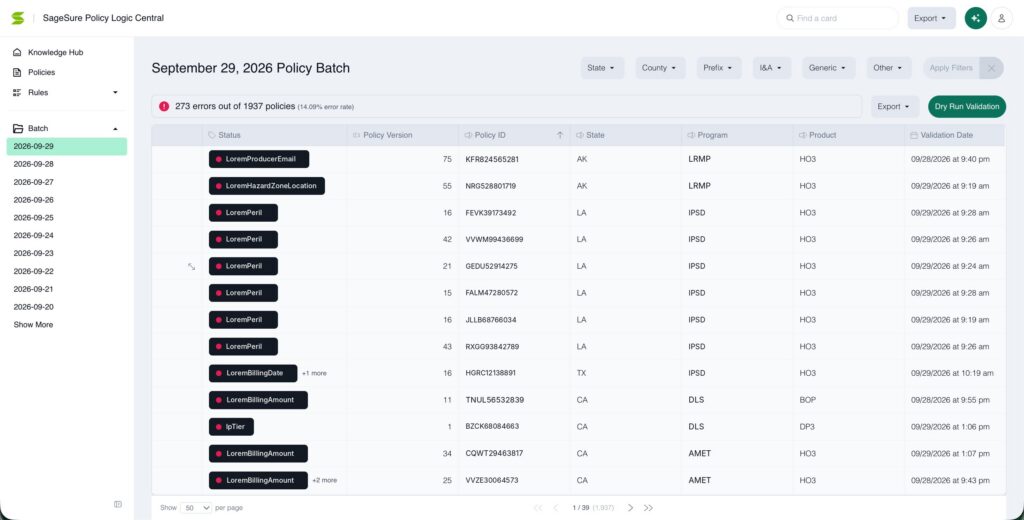
Saving an insurance giant millions with an elegant, AI-assisted system

 Health
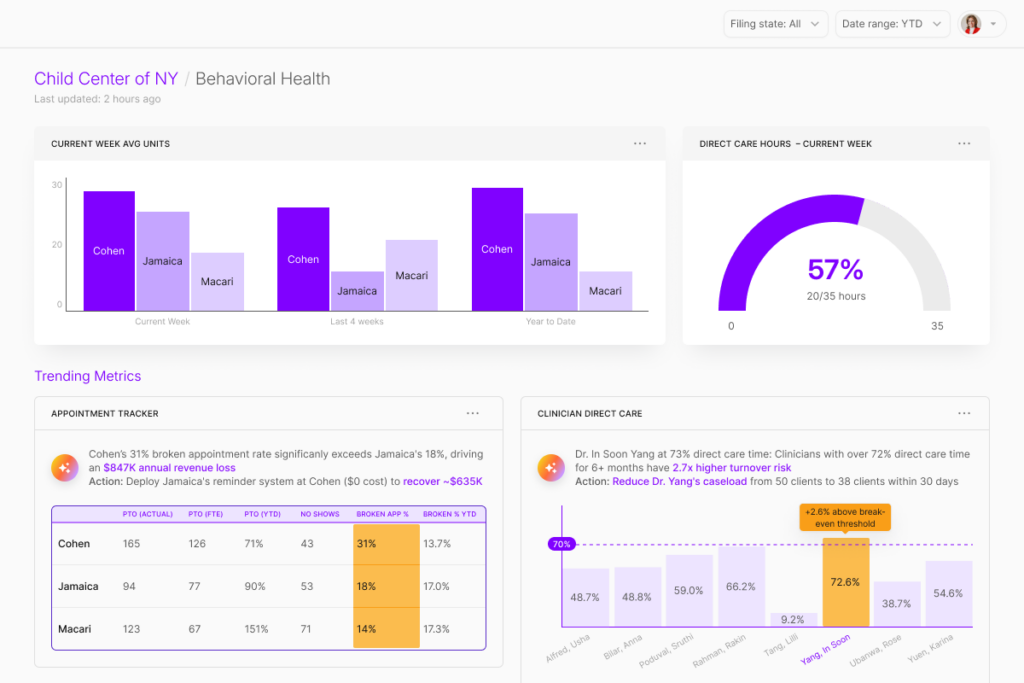
Unlocking the potential of hundreds of community health centers

Cohen’s 31% broken appointment rate is driving an $847K annual revenue loss. Action: deploy Jamaica’s reminder system to recover ~$635K.
 Travel
A platform modernizing luxury travel operators