He’s always there, in your inbox.
I always like reading what Brian Morrissey has to say. He used to be the editor in chief of Digiday, a trade publication for the world of digital media, but for many years, he’s been on his own, publishing a newsletter called The Rebooting. He focuses on media not as a higher calling, but as a real business. Given the state of the industry, this means he writes a lot of bracing things, like this post from a month ago:
There’s no shortage of handwringing over the loss of trust in news. I find this focus misguided. You cannot control others, and this is a time of low trust in all manner of institutions. Often, the concerns about trust are subtly put on the audience, as if the news industry is being victimized, rather than focusing on the product.
You tell ’em, Brian! Later in that same piece, he pointed out that news itself is more and more of a feature, rather than a core product—the New York Times for example, is still a newspaper, but it puts tons of focus on games, cooking, and product reviews, too. As to the role of AI?
OpenAI’s short-lived Pulse feature radicalized me to the future being personalized news updates being mixed in with life updates delivered by AI agents. This is inevitable, and it’s “good enough” for the majority who are not news junkies.
But that doesn’t mean he sees ChatGPT as the savior of the industry. In a post a few days ago, “The AI content paradox,” he broke down where things work and don’t. He put it simply: “AI has not eliminated the need for humans to write or design. And I don’t think it’s going to happen.”
He later continues:
There’s still a social cost to using AI to express yourself or your ideas. It’s embarrassing, even somewhat offensive, to outsource that. Serious people don’t behave this way…. So far, all those AI-generated podcast guest pitches are about 0 for 600 in booking a guest on The Rebooting Show. To the executives using these services: There is also a social cost for this sweaty behavior.
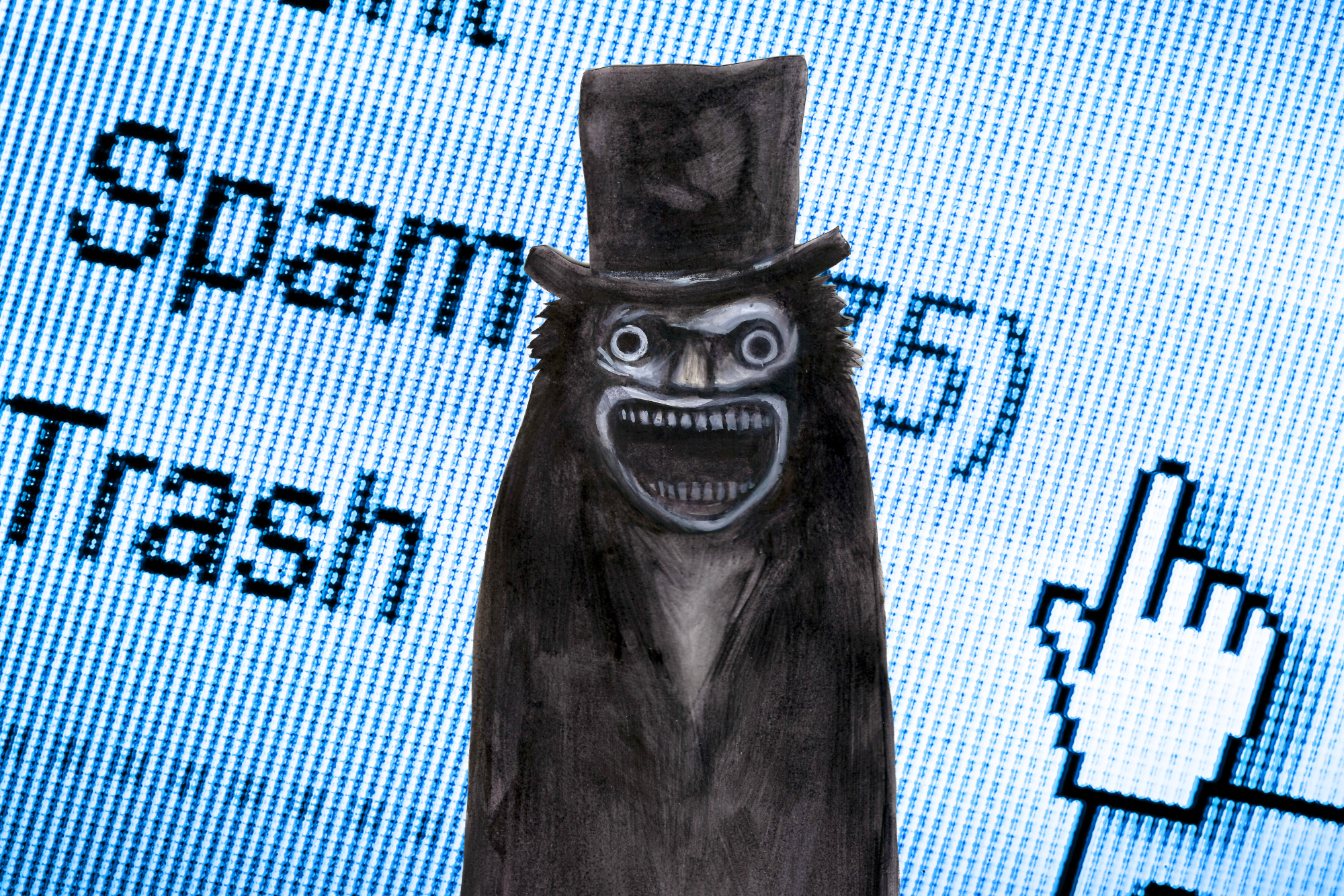
“This sweaty behavior” is right. I, too, receive those podcast suggestions, and they often come in clumps—three or four in an hour. I now immediately send them to spam and block the sender. I also receive offers to run reports on my business, free AI assessments, and so forth. It probably totals more than 100 messages a day, not to mention what goes into my spam folder. They always look like this:
I noticed your recent episode with Gorthrup Ploon on using AI to make cotton candy, especially the point about not shoving the cotton candy directly into the CD drive because that could hurt the Pentium. That thread feels very aligned with the show’s broader focus on how AI changes software, strategy, [[COMPUTER INSERT THIRD THING HERE]].
Snerkliff Babadook is the Founder and CEO of Bagsack Design, creator of the Design Pumpkin™, and a pioneer in digital dog farming at Riker’s Island University, as well as the first Babadook to lead a design team at McKinsey & Company until the serious problem. A strong conversation for The Aboard Podcast could explore why most AI and innovation efforts fail, how to encourage adoption, and the key role Babadooks can play in motivating users once you let them out of the basement and feed them more than worms.
Let’s make it happen!
Jeff
Jeff@HotTimesPop.biz
Dozens of these a day. What a terrible use of AI! You had a robot read the transcript of our podcast and write an email, and you dumped it in my inbox. Why bother with humans in the mix at all? Why not have an AI-generated podcast, and an AI-generated PR firm, and AI-generated guests? Then you can sell AI-generated ad inventory on top of it, and a synthetic audience can download it and give it five stars. Everyone wins.
Morrissey sees this mess as temporary, and media as a counter to this increasingly AI-driven world: “My theory is we will see a return to true digital marketing creativity…. I expect a resurgence of analog media formats like niche magazines because to put together a magazine as opposed to a newsletter is a lot of effort.” From his lips to God’s ears.
There’s another reason I find the “sweaty” spam so depressing: AI tools are really good at making hypercustomized things. Instead of sending me an email that pretends to be human, why not send me an automated report that uses AI wisely? Let’s say you’re a PR firm. You could do an analysis of our podcast—the guests we’ve had, or the content we cover. Then you could do an analysis of all of your clients—the podcasts they’ve been on, the subjects they cover. And you could say:
Hey, Paul — I’m writing from PodSmart, we’re a small PR firm focused on tech industry podcasts. We did some automated analysis of up-and-coming shows, and we matched The Aboard Podcast to some of the people we represent. I want to put three options in front of you:
[List them, with information on their recent work and links to full, detailed profiles on the PR firm’s website, which will include headshots and links to other podcasts they’ve been on. A nice visual or infographic showing their reach wouldn’t hurt. There are over two million ways to do this these days.]
We’re putting some energy into promoting their appearances, so my guess is that we can find you another couple thousand listens per episode. Only if it’s a good match, of course!
This is an automated email and I won’t keep filling your inbox, but if you hit reply it will go straight to me. Glad to chat further and would welcome a chance to be on your radar in general. We’re finding good ways to grow your audience organically and I’d be glad to trade notes. That said—if you never want to hear from me again just click here.
Sincerely,
Carly
In other words, there’s a middle ground: If you make a robot do a little work that actually is focused on what I want—growing my audience—and you are respectful and are clear about the transaction as well as what is created by a robot versus a human, I will lean in. If I received the email above, I might not respond, but I probably wouldn’t junk it or click the opt out.
It’s entirely possible, with a minimum amount of labor, to make me not hate you—and encouraging the customer to not hate you is, in this era of modern digital marketing, the true top of the funnel. We have the tools to do that. It’s much, much easier than it used to be. But instead of doing that work, people are using AI to be both lazy and sweaty at once. Could I ask folks in digital marketing to towel off—and work just a little bit harder?